
Gnawa Music: From Sub-Saharan Roots to Khamlia
Gnawa is a spiritual music of Morocco with roots in sub-Saharan Africa. It is played on the guembri, a three-stringed bass lute, and the qraqeb, heavy metal castanets, with call-and-response singing. UNESCO recognised Gnawa as intangible cultural heritage in 2019. Near Merzouga, you can hear it in the village of Khamlia, on our 4x4 desert day.
Who Are the Gnawa?
The Gnawa are descendants of West Africans, among them Bambara, Hausa and Fulani people, who were brought across the Sahara to Morocco, many of them enslaved. Their music took shape in the 16th and 17th centuries, blending the rhythms of their homelands with the Sufi traditions of Moroccan Islam. Today the Gnawa are Moroccan and Muslim, and their songs still keep the memory of that journey.
The Instruments
Three instruments carry the music.
| Instrument | What it is | What it does |
|---|---|---|
| Guembri | A long three-string lute with a body covered in camel skin | The deep, repeating bass line; played by the master |
| Qraqeb | Pairs of heavy iron castanets, one pair in each hand | The constant metallic beat that drives the music |
| Tbel | A large double-headed drum played with sticks | Opens the ceremony and leads processions |
The Sound: Rhythm, Voices and Trance
The master, the maalem, plays the guembri and sings the lead; the others answer him in chorus while they play the qraqeb and clap. Each song repeats a short pattern again and again, a little faster each time, until the rhythm takes over. Dancers move to it in leaps and turns, and in a ceremony some reach a trance.
The Lila: A Night of Music and Healing
The heart of Gnawa tradition is the lila, an all-night ceremony of prayer, music and healing that lasts until sunrise. It follows a set order of songs dedicated to seven families of spirits, each with its own colour, rhythm and incense. A lila is a private family ceremony, not a show; the performances you see as a visitor are short sets of the songs.
From Ritual to World Stage
Since the 1990s, Gnawa masters have played with jazz, blues and rock musicians, and the Gnaoua and World Music Festival in Essaouira has brought them huge crowds every June since 1998. In December 2019, UNESCO added Gnawa to its list of the Intangible Cultural Heritage of Humanity.
Gnawa in Khamlia, Near Merzouga
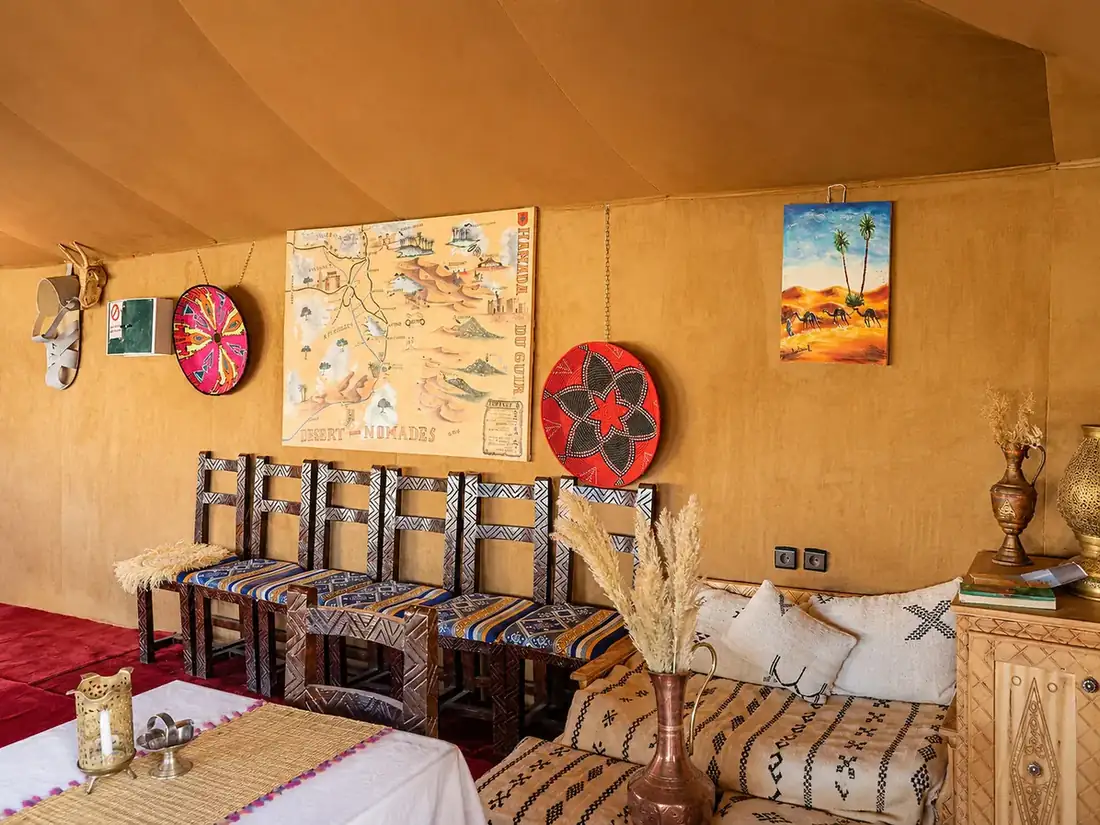
The village of Khamlia, about 7 km south of Merzouga, is home to Gnawa families who lived as nomads before settling there in the last century. Musicians welcome visitors with tea and play a few songs in their music house. Every summer the village holds a festival of three days and nights of Gnawa music, which draws Gnawa from across Morocco.
Khamlia is part of our 4x4 desert tour, included in our 2 nights in Merzouga package and our tours with two nights at camp.
Gnawa and Berber Music: What Is the Difference?
Both are part of life around Merzouga, but they are different traditions. At camp, our Berber music night around the fire is a local tradition of drums and song.
| Gnawa | Amazigh (Berber) music | |
|---|---|---|
| Roots | Sub-Saharan Africa and Sufi Islam | The Amazigh peoples of North Africa |
| Main instruments | Guembri, qraqeb, tbel | Frame drums (bendir), hand percussion, flutes |
| Purpose | Healing ceremonies and celebrations | Weddings, feasts and evenings together |
| Where near Merzouga | Khamlia | Villages, and around the fire at our camp |
Tips for Your Visit
A few things make the visit better for you and the musicians.
- •Clap along when you are invited to: the music is made to be shared.
- •It is customary to leave a contribution for the musicians; your guide can tell you what is appropriate.
- •Ask before you film or photograph people.
- •Dress modestly in the village: shoulders and knees covered.
More about the traditions of the region in our guide to Berber culture. See our tents or check availability.
Frequently Asked Questions
Everything you need to know about this experience
Ali
Founder, manager and head guide, Merzouga Luxury Desert Camp. Ali and our team live and work in Merzouga, and write these guides from what we see every day at the camp and in the dunes around it.
Published by the local team at Merzouga Luxury Desert Camp • Last reviewed: • About Ali and our teamExperience It at Our Camp
Mint tea, Moroccan dinner and Berber music around the fire.