Nomads of the Sahara: Life Around Merzouga
Around Merzouga, some Amazigh families still live a nomadic or semi-nomadic life, moving with their goats, sheep and camels in search of grazing and water. Their numbers are falling as more families settle in villages, but you can still visit and share tea with them.
Who Are the Nomads of Merzouga?
The nomads around Erg Chebbi are mostly Ait Khebbach, part of the Ait Atta, the great Amazigh tribal confederation of southern Morocco. For generations they moved their camels, goats and sheep across the stony desert along what is now the border with Algeria, and many still call themselves irhaln, “people who travel”. From the 1950s, droughts and new borders pushed many families to settle, and villages such as Merzouga grew around the oasis gardens. Read more about the Berber culture of the Sahara.
A Day in a Nomad Tent
Life follows the sun, the animals and the water.
- •Dawn: the goats are milked and the fire is lit for bread and tea.
- •Morning: the herds go out to graze, often with the children or young men; water is brought from the well, sometimes on a donkey or camel.
- •Midday: everyone rests in the shade of the tent during the heat.
- •Afternoon: women weave, cook and churn butter; men look after the animals and fetch wood.
- •Evening: the herds return, the family eats together, and tea is shared until late.
The Nomad Tent
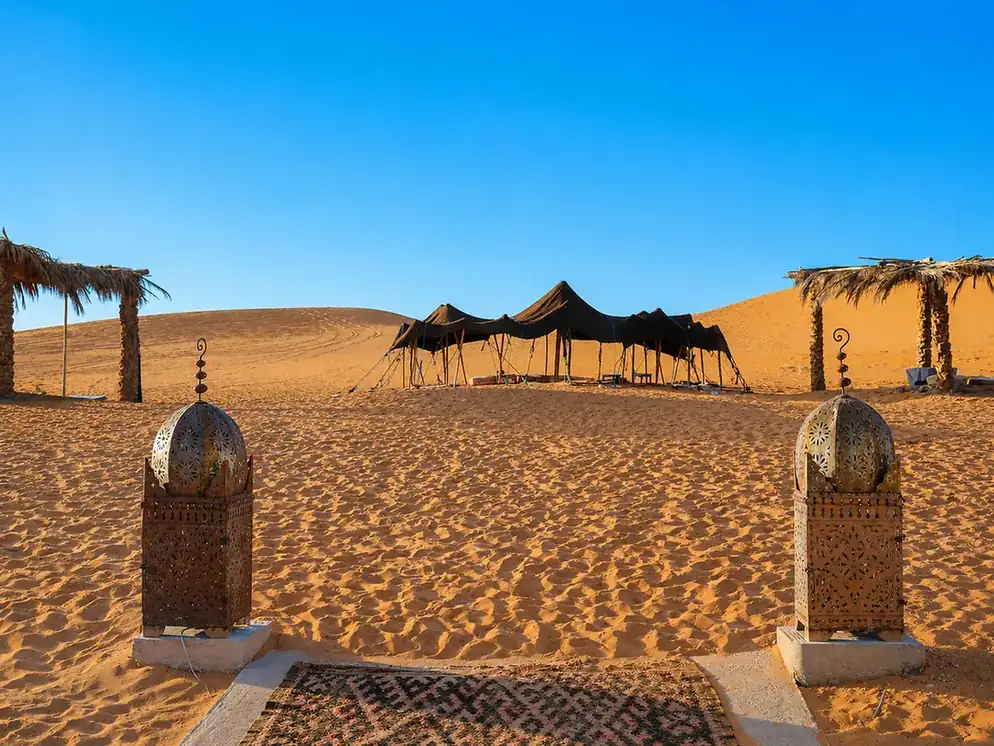
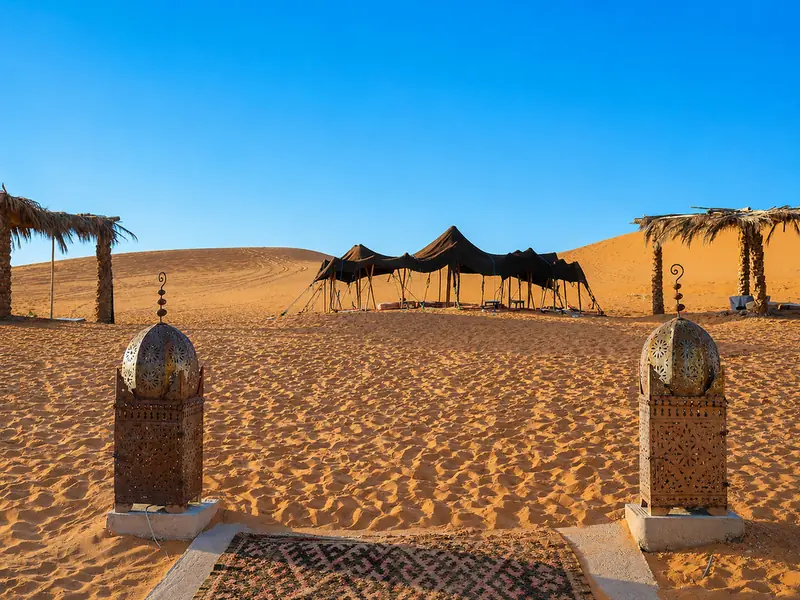
The traditional tent, the khaima, is woven by the women from goat and camel hair, in long dark strips sewn together and held up by wooden poles. Inside, rugs and blankets cover the sand. In summer the sides are rolled up to let the wind through; in winter they are closed against the cold. A family can take the tent down, load it on camels and set it up again somewhere else in a few hours.
Camels, Goats and Sheep
The herd is the family’s wealth. Goats give milk, meat and hair for the tent; sheep give wool and meat; and the camel carries the tent, gives milk and can walk for days with little water. Read how the dromedary survives in our guide to the camels of the Sahara.
Water: The Centre of Nomad Life
Every move depends on water and grazing. Families camp within reach of a well and move on when the plants are eaten or the water runs low. After a rare rain, the desert turns green for a few weeks and the herds follow it. Droughts have become longer: in a recent study, a nomad near Merzouga explained that water once found about 8 metres underground can now lie as deep as 120 metres.
A Changing Way of Life
Long droughts, schooling and health care for the children, and the closed border with Algeria mean that fewer families live as full nomads today. Morocco counted about 25,000 nomads in its 2014 survey, far fewer than a decade before. Many families have settled in Merzouga and the nearby villages, work in tourism or keep their herds with a relative, and return to the tent for part of the year.
| Then | Now | |
|---|---|---|
| Home | A woven tent, moved several times a year | A house in the village for many; the tent for part of the year |
| Water | Shallow wells and seasonal pools | Deeper wells, water trucks and village taps |
| Work | Herding and trading animals | Herding, tourism, camel guiding and crafts |
| Children | Learned the desert from their parents | Most go to school in the village |
Visiting a Nomad Family
Our 4x4 desert tour includes a visit to a nomad family, where you share tea and learn how they live. Your guide translates, and the family shows you their tent and animals. It is a visit, not a show, and the family welcomes it because it supports them. The 4x4 day is included in our 2 nights in Merzouga package.
- •Dress modestly: shoulders and knees covered. See what to wear in Merzouga.
- •Accept the mint tea you are offered, and take off your shoes on the rugs.
- •Ask before taking photos, especially of women and children.
- •A small gift such as tea or sugar is a kind gesture; ask our team what is appropriate.
Frequently Asked Questions
Everything you need to know about this experience
Ali
Founder, manager and head guide, Merzouga Luxury Desert Camp. Ali and our team live and work in Merzouga, and write these guides from what we see every day at the camp and in the dunes around it.
Published by the local team at Merzouga Luxury Desert Camp • Last reviewed: • About Ali and our teamExperience It at Our Camp
Mint tea, Moroccan dinner and Berber music around the fire.