
Sahara Photography Tips: How to Shoot the Dunes of Merzouga
Shoot the dunes at sunrise and sunset, when low light reveals every ridge. Protect your camera from sand with a bag and avoid changing lenses in the wind. Add a person or a camel for scale, and photograph the ridges before anyone walks on them. For stars, use a tripod, a wide lens and long exposures on moonless nights. Always ask before photographing people.
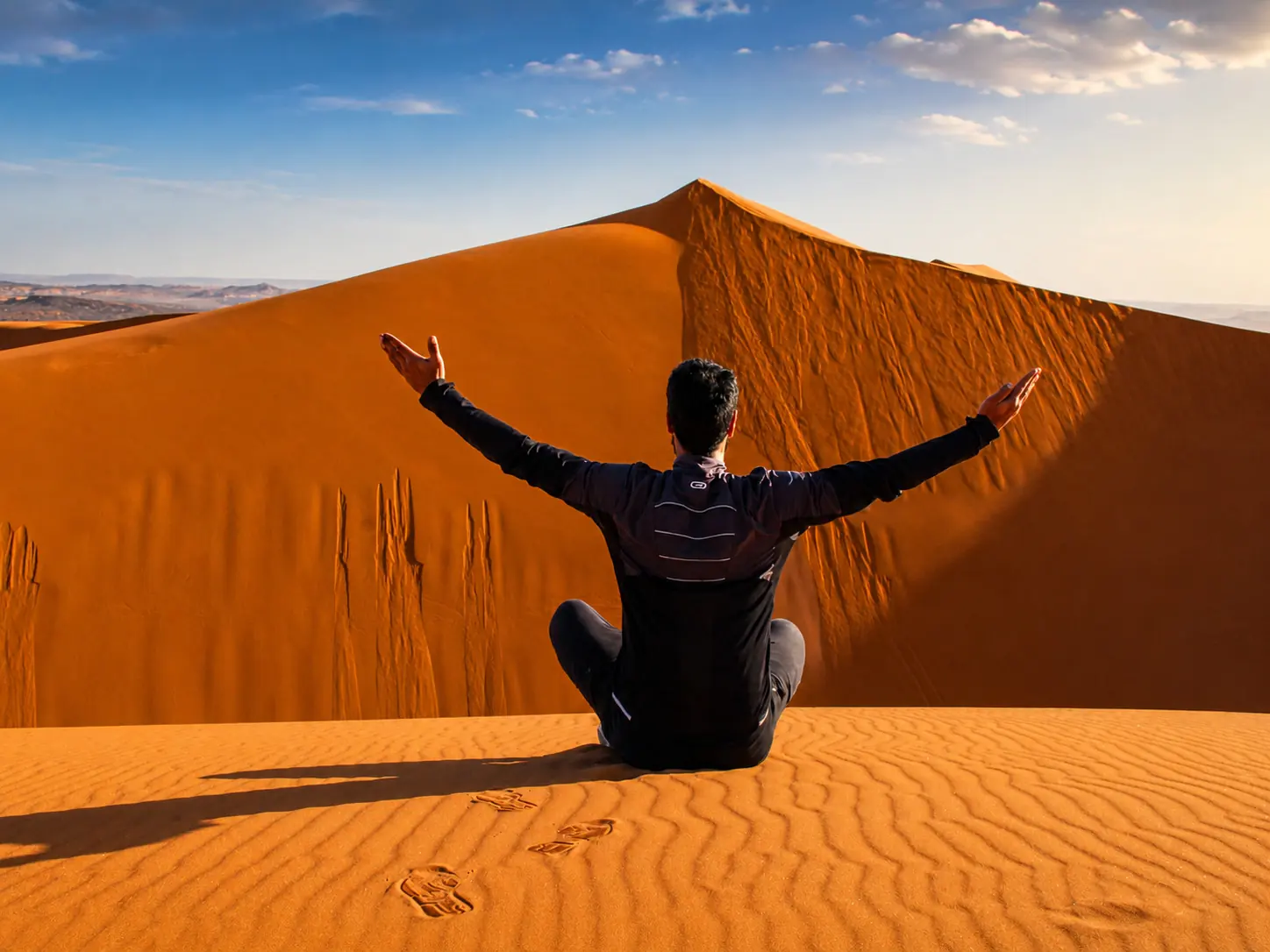
Chase the Light
The dunes are at their best in the hour after sunrise and before sunset (see sunrise and sunset at Erg Chebbi), when long shadows reveal the shapes and the sand glows orange and red. At midday the light is flat and harsh. Climb a dune early to find your spot before the light arrives.
| Time | Light | What to shoot |
|---|---|---|
| Before sunrise | Soft, blue and pink | Silhouettes of the dune ridges, the camp at blue hour |
| Sunrise and the hour after | Low, warm, long shadows | Ridges, ripples and wide views of the dunes |
| Midday | Hard, from above, little shadow | Details, people in the shade, the 4x4 and villages |
| The hour before sunset | Low, golden to red | Camel caravans, footprints, layered dunes |
| After sunset | Blue hour, then dark | The camp lights, the campfire, the first stars |
| Night | Moon or starlight | The Milky Way and star trails on moonless nights |
Camera Settings to Start With
Bright sand fools the light meter, so photos often come out too dark. Add +0.3 to +1 of exposure compensation and check the histogram. These settings are good starting points:
| Scene | Settings |
|---|---|
| Dunes in golden light | ISO 100, f/8–f/11, exposure +0.3 to +1 |
| Camel caravan silhouette | Expose for the bright sky, telephoto lens, fast shutter |
| Midday | Polarising filter to darken the sky and cut glare |
| Campfire | ISO 1600–3200, widest aperture, around 1/30 s |
| Milky Way | ISO 3200, f/2.8 or wider, 15–25 s on a tripod |
Composition: Lines, Scale and Clean Sand
A few ideas that make dune photos stand out:
- •Use the curving ridges as leading lines into the frame
- •Add a person, a tent or a camel to show how big the dunes are
- •Use a telephoto lens to stack layers of dunes and compress the view
- •Photograph untouched ridges first, before anyone walks on them; then use footprints as a subject
- •Keep it simple: one ridge, one shadow and the sky can be enough
Protect Your Gear
Fine sand gets everywhere:
- •Keep your camera in a bag or a sealed plastic bag when you are not shooting
- •Avoid changing lenses outdoors, especially in the wind
- •Fit a clear or UV filter to protect the front of your lens
- •Carry a hand blower and a soft microfibre cloth to clean lenses; do not wipe sand across the glass
- •Keep cameras and phones out of the midday sun to avoid overheating
- •Bring spare batteries and a power bank: cold nights drain batteries faster
See our Sahara packing list for everything else to bring.
The Night Sky
With very little light pollution, the sky over Erg Chebbi is ideal for astrophotography. Choose a night around the new moon, use a sturdy tripod and a wide lens, open the aperture fully, and try exposures of 15–25 seconds at a high ISO. Focus manually on a bright star, and walk a little away from the camp lights. More in stargazing in Merzouga.
The bright centre of the Milky Way is easiest to see from spring to early autumn. In winter, the sky is just as clear, but bring warm clothes: nights in the dunes are cold.
Shooting With a Phone
Most of these tips work with a phone too:
- •Tap the sky and lower the exposure to keep the colours of sunset
- •Use night mode for the camp and the stars, with the phone resting on something steady
- •Wipe the lens often; a fine layer of sand makes photos hazy
- •Keep the phone in a pocket or a zip bag on the camel and the quad
Photo Ideas at Our Camp
Shots worth taking during a stay:
- •The caravan on the sunset camel ride, from the side and against the light
- •The luxury tents and the camp at blue hour, when the lights come on
- •The campfire and the musicians in the evening
- •Sand flying behind a quad bike in the dunes
- •The black desert, villages and nomad tents on the 4x4 desert tour
For inspiration, browse our photo gallery and read about the Erg Chebbi dunes.
Photographing People
Always ask before taking someone’s picture, especially in villages, at the Rissani market and when visiting a nomad family, and accept a no with a smile. Your guide can help you ask.
Drones are restricted in Morocco and can be confiscated on arrival without the right authorisation, so check the rules before you bring one.
Frequently Asked Questions
Everything you need to know about this experience
Ali
Founder, manager and head guide, Merzouga Luxury Desert Camp. Ali and our team live and work in Merzouga, and write these guides from what we see every day at the camp and in the dunes around it.
Published by the local team at Merzouga Luxury Desert Camp • Last reviewed: • About Ali and our teamPlan Your Stay in the Dunes
Private luxury tents at the foot of Erg Chebbi, breakfast included.