
The Erg Chebbi Dunes: Morocco’s Great Sand Sea
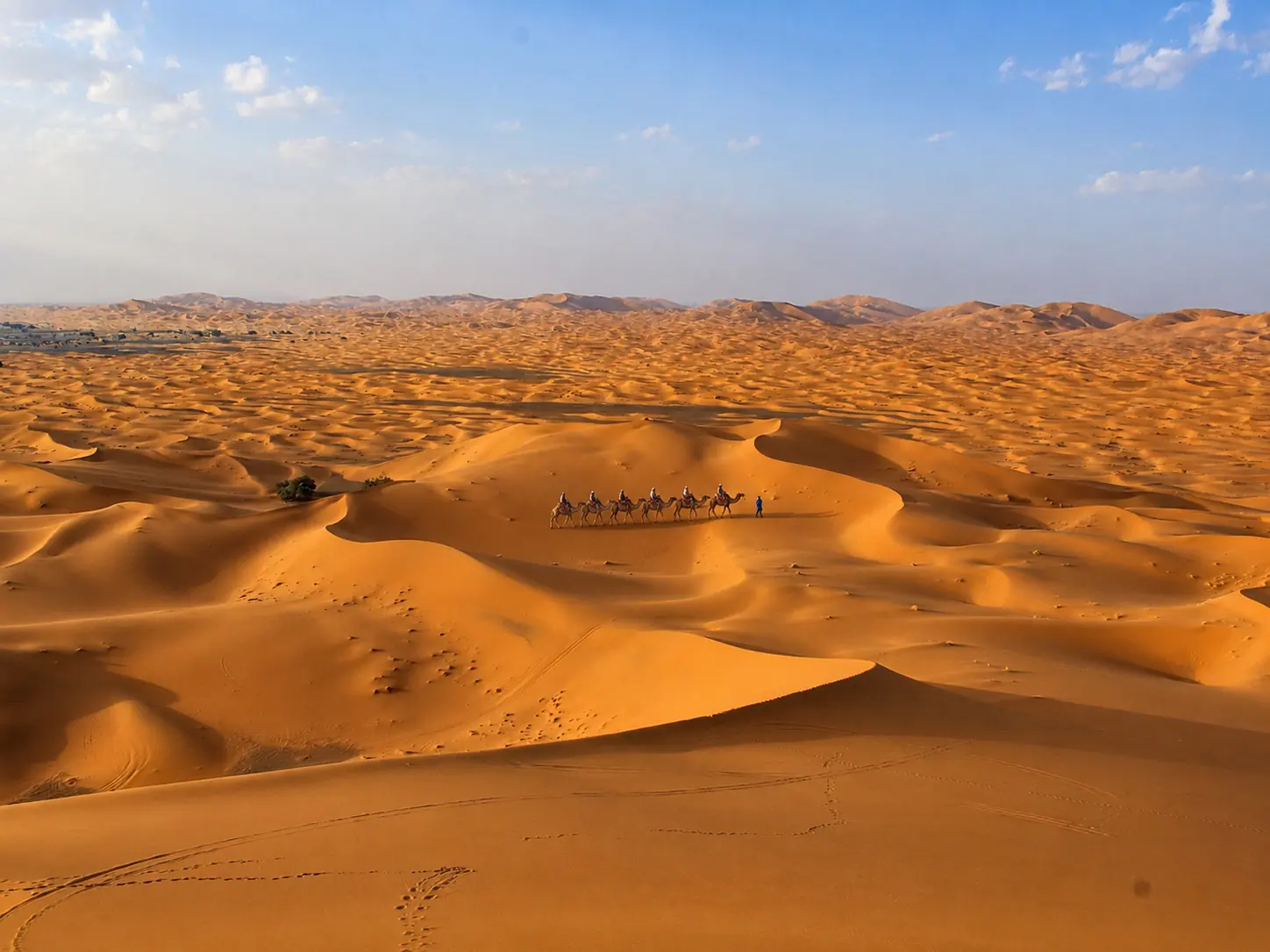
Erg Chebbi is a sand sea of high dunes right beside the village of Merzouga in south-eastern Morocco. It stretches about 22 km from north to south and up to about 5 km wide, with its highest dunes rising to around 150 m. The road is paved all the way to Merzouga.
What Is an Erg?
An erg is a large area of wind-blown sand dunes. Erg Chebbi is one of Morocco’s two great ergs, and the easiest to reach: the paved road ends at the edge of the dunes, in Merzouga. Its highest dunes rise to around 150 m above the surrounding stony desert. The other great erg, Erg Chigaga, is reached from the Zagora side: compare them in Merzouga vs Zagora.
Erg Chebbi in Numbers
The key facts about the dunes:
| Erg Chebbi | |
|---|---|
| Length | About 22 km from north to south |
| Width | Up to about 5 km |
| Highest dunes | Around 150 m |
| Location | South-eastern Morocco, near the Algerian border |
| Gateway village | Merzouga, at the edge of the dunes |
| Name in Arabic and Tamazight | عرق الشبي · ⴻⵔⴳ ⵛⴱⵉ |
How the Dunes Were Formed
The dunes were built by the wind. Over thousands of years, it carried sand across the flat, stony desert around them, the hamada, and piled it up here into tall, star-shaped dunes. The wind still reshapes them every day: ripples change overnight, and the crests move slowly over the years.
The orange colour comes from a thin coating of iron oxide on the grains of sand, which glows red in the low sun.
The Legend of the Dunes
Locals tell a story about how the dunes came to be. A rich family once refused shelter to a poor woman and her child who came to their door. As a punishment, God buried the family and their house under a mountain of sand: Erg Chebbi. The story is a reminder of how much hospitality matters here. Read more about Berber culture around Merzouga.
The Colours of the Dunes
The sand changes colour through the day, from pale gold at noon to deep orange and red at sunset. The best light is at sunrise and sunset, when long shadows sharpen every ridge. Photographers should read our Sahara photography tips.
Life in the Dunes
The dunes look empty, but they are full of life. In the morning, the sand is covered with tracks left during the night.
- •The fennec, the small desert fox with huge ears, active at night
- •Desert hedgehogs, jerboas and lizards
- •Beetles, whose tiny tracks cross every dune at dawn
- •Desert birds, and flamingos at the seasonal lake after rain
After rain, the lake of Dayet Srji fills near the dunes and draws birds. Nomad families still graze their animals on the edges of the erg; read about the life of Sahara nomads.
How to Visit
Driving from Marrakech takes around 9–10 hours, so most people break the trip; from Fes it is a full day. See how to get to Merzouga. Once there, explore on a camel ride, on foot along the ridges, on a sandboard, or around the edges on a 4x4 tour.
The best way to experience Erg Chebbi is to spend a night in it. As darkness falls the dunes go silent, and the sky fills with stars.
When to Go
Spring and autumn bring warm days and cool nights. Summer is very hot, so enjoy the dunes at sunrise and after sunset. Winter days are sunny and nights are cold and clear. See the best time to visit Merzouga for the weather month by month.
Staying at Our Camp
Merzouga Luxury Desert Camp has private luxury tents at the foot of Erg Chebbi, each 35 m² with its own bathroom and hot shower, heating and air conditioning, from €90 a night with breakfast. Our private tours bring you from Marrakech, Fes, Ouarzazate or Errachidia.
Frequently Asked Questions
Everything you need to know about this experience
Ali
Founder, manager and head guide, Merzouga Luxury Desert Camp. Ali and our team live and work in Merzouga, and write these guides from what we see every day at the camp and in the dunes around it.
Published by the local team at Merzouga Luxury Desert Camp • Last reviewed: • About Ali and our teamPlan Your Stay in the Dunes
Private luxury tents at the foot of Erg Chebbi, breakfast included.